
We are recognised as authorities in our specialised fields. We publish newsletters with informed opinions that are free for you to subscribe to.
Knowing when to hand over the keys
This is part of a three-part series on Succession — covering family, boards, and CEOs — and while each part stands on its own, they’re best read in order.

The founder who came back — and the CEO who paid for it
This example is a start-up company with an owner board. A majority of the board believed that it was in the interests of the company to transition to a post-founder structure. The founder, on the other hand, was not ready to do so, as he did not feel that his journey or legacy was complete.
It was a large business with a number of HR challenges, and the scaling issues were evident. Eventually, an exit package was agreed upon, in which the CEO was to exit the board, for a period, to allow an external successor to have a decent run at it.
The founder did not believe that the new appointment would be able to do the job like he did, nor that they were operationally fit for the purpose.
At the expiry of the new CEO’s first term, the founder reappointed himself to the board and vetoed an extension for the new CEO. The new CEO was collateral damage, caught in the emotional trauma of the founder not wanting to leave before he was ready, and was in the middle of the conflict with the shareholders.
How to leave well
This CEO, supported from the beginning by a board with functioning governance that included both independents and shareholders, ran a scale business for twenty-five years.
A year before his intended departure, the CEO announced his desire to retire from the role to the board. As the timeframe firmed up, the board began a formal recruitment process.
This created a lot of fears within the team. Board communications are sensitive to information like this, and competitors can sense weakness, thereby target the business.
The CEO moved to dispel these fears with the board’s support. Misinformation was corrected, and the CEO openly communicated the succession process, inviting every team member to directly approach him with any concerns.
The role was advertised both publicly and internally. A robust process was followed. In the end, two candidates were considered out of more than 20, one internal and another external. They settled on the internal candidate.
The messy exit that worked out anyway
This is yet another start-up story of a founder leaving before they were ready. Again, an external candidate was selected for the role following a full best-practice process. The business remained strong and had continued to grow throughout the transition, even with some madness within the process. Common sense eventually prevailed with the founder.
The founder burnt several relationships during the process, but eventually rediscovered the trust that had held the business together through 10 years of exceptional growth.
To some degree, the new CEO now lives with the legacy of that chaos. The survivors have come to recognise what the founder bought, and is now missing, and redeveloping it in their own ways.
When burnout forces your hand
This small, specialised business was highly dependent on the CEO. It was a very stressful environment, had a large asset base, and high levels of risk attached to those assets.
It was one of those businesses where the board had as many people on it as the ones working in the business. The board recognised the signs of burn out early on, but due to the projects underway, it was decided that there was no choice but to not rock the boat.
The CEO recognised an emerging lull and decided to step back from the role, forcing the board to face a succession.
It had the option of an interim fix with a board member running it, but after following an aggressive recruitment process at a relatively short notice, a successor was eventually found.
The whistle that finally blew
This example was a relatively small company that faced significant governance challenges stemming from a problematic CEO. The board was aware of the negative cultural issues, but it was the CEO’s first-ever period of leave that created an opening for change: the Senior Leadership Team (SLT) came forward and blew the whistle on false accounting and misappropriation during his absence. The CEO was confronted with the allegations on his return, and resigned, with the board choosing not to pursue the matter. A part-time CEO was appointed externally on a temporary basis, and the business drifted as the SLT was resistant to the appointment.
The board then attempted to grow one of the SLT members into a viable CEO, but he declined the role. A new external contractor was subsequently engaged to support SLT performance and development, and they proved to be a viable choice in the absence of an internal candidate.
The board, however, was concerned that appointing someone external as the CEO would risk triggering an SLT turnover at such a critical moment in the businesses’ international growth. That view was shared by the prospective CEO.
Eventually, they had to make the hard call and appoint an external CEO, a long period of ambiguity that damaged the culture and those working in the business, including the incoming CEO.
My own turn: the handover I lived
This one is Gilligan Sheppard. I am a shareholder and board member, and for 40 years I led it. But eventually, when it was time to hand over, I realised that being intellectually ready was not the same as being emotionally ready.
It was also fairly obvious to me that if I had some capable people in their mid-forties, and if I chose to hold on until my mid-seventies, I would not have these great people anymore. They would either find another opportunity, or they would grow into their mid-fifties with not a lot of runway.
Also, heading into my mid 60’s and watching others around me get sick, and some die, you realise the worst thing that can happen to your people and your clients is to get taken out suddenly. It’s always best to have someone else in the seat for a year or two while you are still around.
So, I started the dialogue five years ago. Joshna Mistry has officially been in total control for the last eighteen months, but the full extent of her influence spans nearly three years, as we had had a handover period.
An added challenge is that I don’t intend to retire, and Joshna and the team don’t want me to either. I now work for someone who previously worked for me, while sitting on a board that she reports to, and while remaining a major shareholder. Awkward.
It was a great call, sure, fraught with emotional trauma for both of us, but I have gratitude for having her to take over. I hope she has gratitude for the opportunity that was presented to her, and I believe we both take pride in making something most would say is unworkable, work. That comes from respect, acceptance, a belief in the good of what we have created, and the pride that it will continue.
What the CEO stories taught me
- Make sure you are as ready to do so as you can be. Start early. Time helps.
- Understand your business or family. Be authentic and ensure communication is clear in both directions. Speak, and listen. You might not like what you hear, so adapt.
- Don’t leave it for later. If you do, you may struggle to find someone who really wants the opportunity, or the opportunity itself could become unappealing.
- Another good thing to remind yourself is that you will only ’know’ others if you ’know yourself’.
- Succession is a time of change, and it’s underpinned by intense human emotions. The emotions drive success more than the rational mind and other business decisions, when managing succession.
- If human relationships are strong, even in crisis and conflict, there is less trauma.
- Trust, loyalty, and selflessness for the greater good make everything easier.
- Prioritise diversity in thought. Look for shared values as thoroughly as possible, so that you can achieve alignment and performance faster.
If you are considering picking up the baton
- If you are an internal candidate successor, you have picked the harder road, and it is frankly easier to leave. Your peers, and in some cases your superiors, will now be reporting to you. The psychological weight of that shift is real, and it takes time to work through.
- At the other end of the dynamic, you are dealing with a boss or an owner who may or may not have travelled through the journey, and will probably turn into a kid again. You will then have to reinvent yourself with the team and lead it.
- The process will be tough, the transition and establishment even more difficult. But when that pain subsides, those who take on that challenge will be stronger and better for the effort.
- One final thing for the successor through this process: the self-doubt will come. Have someone to talk to, outside the noise.
A change of voice
I will close with the voice of those who accepted the baton and travelled the journey.
On the importance of having someone to talk to:
“I was calling to say Hi, really. I am in New Zealand next week for a couple of days on a fact-finding mission, and thought if your schedule allowed, I could come and say hi in person?
We’re finally there on that transition you helped me so much with. Thank you for your invaluable guidance – you helped me think through some very difficult considerations. Even just knowing I could call you to chat gave me confidence to be able to trudge through the muck!
Only now am I realising how draining and difficult the process has been! I think without some of your guidance along the way I would have folded my cards long ago….”
If the exiting founder, owner or CEO can survive the process, and the incoming executive can too, the rewards will justify it.
The feeling transitions from fear, vulnerability and dislocation to gratitude, belonging, and pride.
To demonstrate what this feels like after taking the leap of faith of trusting others, and also how they feel on the other side of the chasm again, another voice. These are two edited excerpts from emails I received on this.
These are words from a new CEO to a client who felt the succession had lost something from a customer perspective:
“I have tremendous respect, admiration and love for the founder, what he has created, his intellect, and respecting that legacy is a priority to me – which, based on what you seem to imply from observations over the last 10 years, you may not know. Me taking on the CEO role, believe it or not, is to get the business where it needs to be to respect that.”
The second lands on a point of philosophical conflict between the founder and incoming CEO:
“We offer shares to all employees who have completed two years with us. The founder has always believed very strongly in recognising the contribution of labour and talent, which is why we have a bonus system, and many years ago, the board decided to take this further by offering shares to employees. This is ’justifiable’ for all the reasons we hear – retention, increased engagement, and increased incentive to drive performance. For the founder especially, it is about providing the opportunity to the team to learn how to own something, and put on the ’investor hat’.
It’s not technical, and it won’t resonate with everyone – but I think I have reached MY answer. The reason it works for us is that it is part of a wider value system and culture that is shared by the board, and the shareholders without exception. For us, this is not a strategy, a tool, or an instrument for remuneration. It just feels right for us. And I can’t speak for the others, but for me it doesn’t matter if it works for retention/incentivisation/engagement in our statistics. It feels good to me and it works for who we are, and who I am, and I am proud of that.”
Succession isn’t something that can be sort out overnight. It’s a decision that requires time, and conversations that aren’t rushed. If any of this sounds familiar, or you’re just not sure where to start, let’s chat. Get in touch with me, and we’ll help you map out a succession plan that protects what you’ve built and sets the next chapter up properly.
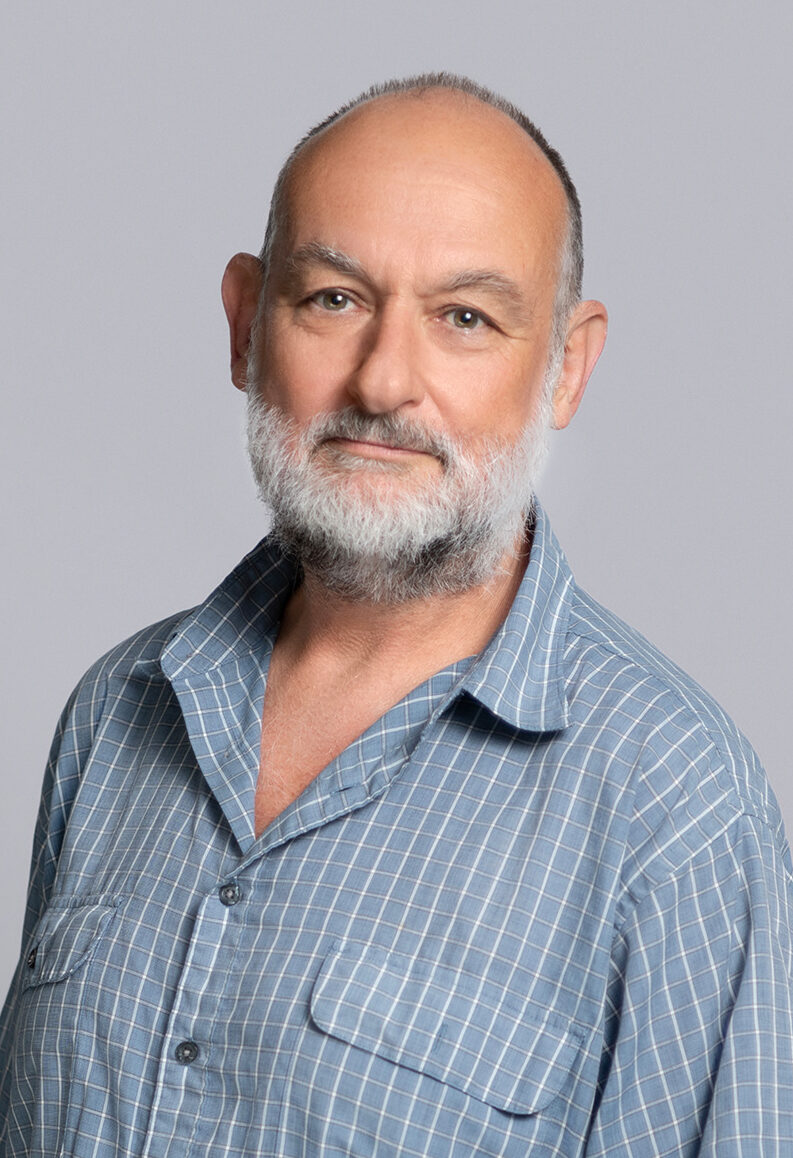
AUTHOR:
Bruce Sheppard

- Bookkeeping (11)
- Bruce's (77)
- Business (154)
- Business Improvement (18)
- China (8)
- Covid-19 (23)
- Enriching (33)
- Events (28)
- GS News (68)
- Info Tech (16)
- Investment (25)
- IRD & Tax (53)
- Joshna's (34)
- Liftoff (7)
- Live Convos (20)
- Networks (7)
- Our Clients (23)
- Richard's (68)
- Yi Ping's (26)
- Tax Updates (171)
- Trusts (10)
- Valuations (3)
- Wealth (25)






If you don’t know where to begin, want to talk through something, or have a specific question but are not sure who to address it to, fill in the form, and we’ll get back to you within two working days.
View all of our services
Find out about our team
Look through our articles
Read more about our history
Business Advisory Services
Tax Specialist Services
Value Added Services
Get in touch with our team
Want to ask a question?
What are your opening hours?
AML & CFT Act in New Zealand
Events with Gilligan Sheppard
Accounting software options
Where are you located?
Events
Find out about our team
Look through our articles
Read more about our history
Business Advisory Services
Tax Specialist Services
Value Added Services
Get in touch with our team
Want to ask a question?
What are your opening hours?
AML & CFT Act in New Zealand
Events with Gilligan Sheppard
Accounting software options
Where are you located?
Events